
Momentum Solar
Your Numbers
kWh per year — CT average ~8,500
$
per kWh
$
per month — what utility would charge for same kWh
% increase per year
$
per kWh
% increase per year
Payment Trend
Year-by-Year Breakdown
YearUtility
Monthly
Solar Monthly
(before EPP)
Solar Monthly
(EPP)
Yearly
Savings
Your 25-Year Summary
💡

If You Do Nothing

$0
Total utility payments over 25 years
📈

Savings (before EPP)

$0
💰

Savings With EPP Pricing

$0
💡 What is Efficient Partner Pricing (EPP)?
Save Even More

Efficient Partner Pricing (EPP) rewards homeowners who help us operate efficiently. It's the same idea insurance companies use with non-smoker discounts — people who cost less to serve get better rates.

Here's how it works for you:

  • You set aside time to go through all the information and upgrade to solar in one visit
  • That saves us from making a second trip to your home
  • Each home we don't have to revisit lets us help one additional homeowner that month
  • We pass those efficiency savings back to you as a lower monthly rate

To lock in your EPP rate today, we just need three things:

  • Sign the agreement — get your solar journey started right now
  • Schedule your Engineering Visit — we send a specialist to finalize your custom system design
  • Set up autopay — enroll in automatic bank draft (ACH) to waive the monthly billing fee and lock in your lowest rate

It's a win-win. You get a better price today, and we get to help more families switch to solar. That's why the EPP rate you see above is lower than our standard pricing.

📄 Your Solar Lease — What You're Signing Up For

1. Who Is This Agreement Between?

This agreement is between you (the homeowner) and IGS Solar, LLC (the company that owns and maintains the solar system).

IGS Solar leases the equipment to you. You pay a monthly amount to use the system and keep the power it generates. IGS handles installation, insurance, repairs, and monitoring for the full 25 years.

All obligations start on the "Transaction Date" listed on your agreement — that's the day you sign.

2. How Long Is This Agreement?

This is a 25-year lease — 300 months total. Think of it like leasing a car, but for solar panels.

The clock starts on the first day of the month right after your system gets turned on and connected to the grid. We call that the "Interconnection Date." Every year after that is a "Contract Year."

What this means for you: You're locking in your solar rate for 25 years. No renegotiating, no surprises. After 25 years, you choose what happens next — renew, buy the system, or let us remove it for free.

3. Your Monthly Payment

You pay one fixed monthly amount for using the solar system. That's it. No equipment costs, no installation fees, no maintenance bills.

When you sign up, you'll set up automatic payment by credit card, debit card, or bank transfer (ACH). If you set up auto-pay through your bank (ACH), we usually waive the small monthly billing fee — so it's basically free to pay.

You'll get an email invoice every month. If a payment bounces, there's a standard returned-check fee (same as any other bill). If you're late, the fee is 1.5% per month on the past-due amount.

Sales tax may apply to your monthly payment, just like it does on your utility bill. That's normal.

Bottom line: Set it and forget it. One predictable payment. No utility bill roller coaster.

4. What Each Side Handles

What IGS handles (so you don't have to):

  • Installation and construction start to finish
  • A revenue-grade meter that tracks every kilowatt-hour your system produces
  • Insurance on the system against damage or loss
  • All repairs if something breaks
  • No lien on your house — your home title stays clean. We may file a simple equipment notice (like a car loan notice) just to show we own the panels, but that's it

What we ask from you:

  • Keep trees and bushes trimmed so they don't shade the panels
  • Don't clean or modify the system yourself — call us if something looks off
  • Tell us ASAP if you see damage or something missing
  • Sign permit and inspection paperwork within 7 days when we send it
  • Keep your internet on — the monitoring system needs a connection to track performance. We can use your WiFi or install a cellular gateway
  • Get HOA approval if your neighborhood requires it
  • Don't use the system to heat a pool or hot tub
  • Share utility bills when we ask — helps us verify your savings

Roof work: If you're getting a new roof or doing construction that affects the panels, give us 30 days' notice. We'll coordinate removal and reinstallation. You keep paying your lease during any brief downtime.

Access: We need to get on your roof occasionally for maintenance or monitoring. We'll always try to give you reasonable notice. Access continues for 90 days after the lease ends, just in case we need to remove the system.

Bottom line: IGS handles the technical stuff. You handle basic homeowner stuff. Fair trade.

5. Before We Install

Before installation day, we do our homework:

  • Engineering site audit to make sure your roof is solid
  • Final system design customized for your home
  • Real estate due diligence
  • All city permits, zoning, and building approvals
  • We claim any available rebates and renewable energy credits

You just need to return any paperwork we send you and get HOA approval if it applies.

If for some reason your roof can't support solar or the city won't approve it, we can cancel the agreement — but that's rare and protects both of us.

6. Changes to This Agreement

The only way this agreement changes is if both of us sign a written amendment. No handshake deals, no verbal promises. We can fix utility paperwork to match the lease terms, but nothing changes your rate or your obligations without your signature.

7. Your Warranties

Your protection comes from two documents:

  • The Limited Warranty (Exhibit 2) — covers defects, workmanship, and materials for 25 years
  • The Production Guarantee (Exhibit 3) — makes sure your system performs

Those two documents cover everything that matters. IGS doesn't make promises beyond what's in those exhibits — but honestly, they cover all the important stuff.

8. Can IGS Sell This Lease to Someone Else?

Your lease may be transferred to a qualified financing partner — just like your mortgage gets sold to another bank. This is standard for solar leases.

Your rate, your terms, your warranty — nothing changes for you. The new company takes over the backend, and the old company is off the hook. Same as when your mortgage gets sold.

9. Who Owns the Equipment?

IGS owns the panels, inverters, and equipment. It's considered personal property — like a leased car, not a built-in appliance. It doesn't become part of your house.

You can't let anyone put a lien on the equipment. If a contractor you hire separately tries to file a lien on the panels, you have 30 days to clear it.

Bottom line: You get all the benefits of solar without the headaches of ownership.

10. Who Owns the Power?

You do. Every kilowatt-hour that hits your roof is yours. That's what you're paying for — the power, not the hardware.

11. Tax Credits & Incentives

Since IGS owns the equipment, we claim the federal tax credits, state rebates, and renewable energy credits (SRECs). That's how we can offer you such a low monthly rate. We take the tax benefits on the front end, you take the savings on the back end. Win-win.

You'll need to sign some utility paperwork so we can process the incentives, but that's standard and takes two minutes.

Bottom line: The tax credits are baked into your low monthly payment. You're already getting the benefit — just in the form of savings instead of a tax form.

12. Can You Buy the System Later? Yes.

Starting at year 5, you can buy the system outright if you want. The price is based on whichever is more fair:

  • Your remaining payments at a discount: All remaining lease payments, discounted at 5% per year. Basically "pay off the lease early at a discount."
  • What the system is actually worth: An independent appraiser figures out the fair market value. IGS pays for the appraisal.

If you buy it, you get any remaining manufacturer warranties and a bill of sale. From that day on, you're responsible for maintenance and repairs — just like you own it.

Bottom line: You have an exit ramp. Most people don't buy because the lease savings are already great, but the option is there if your situation changes.

13. What If You Sell Your House?

You have three easy options. Most buyers love taking over a solar lease because it means lower electric bills from day one.

Option 1: Transfer the lease. Give us 30 days' notice, we run a quick credit check on the buyer. If they qualify, they take over the payments. This is the most common route — buyers see solar as a selling point.

Option 2: Prepay the lease. Pay off the remaining payments in a lump sum. The new owner pays nothing but still gets the solar power. Great for cash buyers.

Option 3: Buy the system (only if you're past year 5) and include it in the home sale. Now the buyer owns the panels free and clear.

Bottom line: Solar doesn't trap you in your house. It's a selling point. And if none of these work, talk to us — we want to help, not punish.

14. What Happens After Year 25?

About 3 months before your lease ends, we mail you renewal forms. You have three choices:

  • Renew — sign the forms and keep going
  • Decline — sign the forms saying you're done, and the lease ends
  • Do nothing — your lease continues year-to-year at the same low rate, and you can stop anytime with 30 days' notice

If you don't renew or buy, we can remove the system for free at a time that works for you. Or we may transfer ownership to you as-is at no charge, and the system becomes yours to keep.

Bottom line: No cliff at year 25. You have options, and if you want out, we clean up after ourselves.

15. System Removal

If you don't renew or buy after 25 years, we can remove the system for free and schedule it at your convenience. We'll take the panels off, seal the roof penetrations, and leave your roof as close to original as possible.

Or we may transfer ownership to you as-is at no charge, and the system becomes yours to keep.

16. Storms, Damage & Insurance

Unless you intentionally damage the panels or are grossly negligent, IGS covers everything — hail, wind, fire, theft, you name it.

Your lease payment stays the same during repairs, but remember — you're still getting power from the grid, so your lights stay on while we fix the system. The repair is on us, not you.

Bottom line: Sleep easy. A tree falls on your roof? Not your wallet. Lightning strikes an inverter? We replace it.

17. Liability Limits

If something goes wrong, IGS is only on the hook for direct damages — not lost profits, emotional distress, or other indirect stuff. Your liability to IGS is capped at what you'd owe under the default section.

Standard lease language. Every contract has it.

18. When Would This Go Bad?

You're in default if:

  • You miss a payment and it's 30+ days late
  • You break a major rule and don't fix it within 14 days of us notifying you
  • You alter the system without permission
  • You give us false info on the application
  • You try to sell or transfer the lease without our okay
  • You go into bankruptcy or foreclosure

Bottom line: Pay your bill, don't mess with the equipment, and be honest. Do that, and you'll never think about this section. 99% of customers don't.

19. What Happens If Things Go South?

This is the worst-case scenario section. If you default, we can try to fix the situation, take the system back, ask for the remaining value, or report it to credit bureaus.

This almost never happens because most people just pay their bill and enjoy the savings. If you're struggling, call us before you miss a payment — we'd rather work with you than against you.

20. Credit Check

We run your credit when you apply. We report your payment history to credit bureaus.

Pay on time, build credit. Miss payments, it can hurt — just like any other bill. Standard stuff.

21. Photos of Your System

We might take pictures of the panels on your roof for our website or marketing materials. Your name, address, and personal details stay private.

Your house might be a solar model home. No big deal.

22. Waivers

If we don't enforce a rule one time, that doesn't mean we can't enforce it later. Standard contract language.

23. Legal Stuff

This agreement follows the laws of your state. If there's a dispute, it gets handled in your local courts. No jury trials, no class actions — just straightforward resolution.

Standard legal boilerplate. Every contract has it.

24. Notices

Important stuff has to be in writing — email, mail, or hand delivery. No "he said, she said."

25. The Whole Deal

This document is the whole deal. No side agreements unless both of us sign them. If a court says one part doesn't work, the rest still stands.

26. Your Right to Cancel — 7-Day Safety Net

You have 7 business days to change your mind. Zero cost. Zero hassle.

Sleep on it. Talk to your spouse. Google us. If you're not 100% in, cancel within a week and it's like it never happened. We'll refund any payments within 10 business days.

To cancel, just send a written notice to:

IGS Solar, LLC
6100 Emerald Parkway
Dublin, Ohio 43016
Email: SolarSupport@igs.com

Before You Sign

By signing, you're saying:

  • "I've read this agreement and I understand it's legally binding"
  • "I know utility rates change over time, so savings can vary month to month — but over 25 years, the math is strongly in my favor"

Don't sign if there are blank spaces. Everything should be filled in before you put pen to paper.

Bottom line: You're making an informed decision. No pressure, no rush. You have 7 days to back out. Let me make sure every blank is filled and every question is answered before you sign.

Your 25-Year Warranty

System Warranty: Professional install, free from defects in workmanship and materials for 25 years under normal use.

Roof Warranty: All roof penetrations are watertight for 5 years. If we put a hole in your roof, we seal it right.

Operation: The system will operate within manufacturer specs. If not, we repair or replace defective parts and restore operation.

Monitoring: Free monitoring for the full 25 years (unless you buy the system). We watch your production remotely. If something's off, we know before you do and we fix it.

Claims: Email SolarSupport@igs.com, call 888.974.0114, or mail overnight to 6100 Emerald Parkway, Dublin, OH 43016 — ATTN: IGS Residential Solar.

What's NOT covered: Damage you cause, unauthorized repairs, new tree growth shading the panels, or failures not caused by a system defect. Acts of God (hurricanes, earthquakes) — but remember, IGS still insures the system against those.

Bottom line: You're covered for 25 years. If the system breaks, underperforms, or leaks — we handle it. That's the whole point of leasing instead of buying.

Solar Panels in Middletown, NJ | 2026 Coastal Guide | REAL Rule + Wind | Solar by Omar
Monmouth County Coastal — NJDEP REAL Rule + Wind Rating

Solar Panels in Middletown, NJ:
Coastal Wind Engineering Guide 2026

Middletown’s JCP&L rates surging from $0.22 to $0.26+/kWh post-June 2026. Our wind-rated rooftop systems pass NJDEP REAL Rule 4ft elevation compliance. Lock SuSI $85.90/MWh before the summer spike.

Get My Free Middletown Quote
Omar Jackson — Middletown NJ Solar Installer
Omar Jackson — Founder, Solar by Omar

180+ Middletown coastal installations. I understand NJDEP REAL Rule 4ft elevation mechanics, wind-rated panel mounting (130+ mph certification), Bayshore municipal coordination, and how to accelerate approvals in Leonardo, Belford, and Port Monmouth.

Is Solar Worth It in Middletown’s Coastal Zone in 2026?

Yes — absolutely. Middletown residents face JCP&L rates surging from $0.22/kWh to $0.26+/kWh post-June 2026. A 12 kW wind-rated rooftop system saves $3,800–$4,600/year. Add NJ SuSI’s locked $1,225+/year, and Bayshore homeowners capture $5,025+/year in protected value — all on $0-down with full wind engineering.

Middletown Township encompasses New Jersey’s most demanding coastal solar market — from Leonardo’s elevated Bayshore homes to Belford’s storm-prone waterfront properties to Port Monmouth’s mixed-use communities. Unlike North Jersey rooftops, Middletown’s coastal zone requires engineering rigor: wind loads, salt corrosion, NJDEP REAL Rule 4ft elevation for mechanicals. We’re the only installer in Monmouth County that masters all three.
130+ mphWind Rated Mounts
4 ftREAL Rule Elevation
$0.22→$0.26JCP&L June Spike
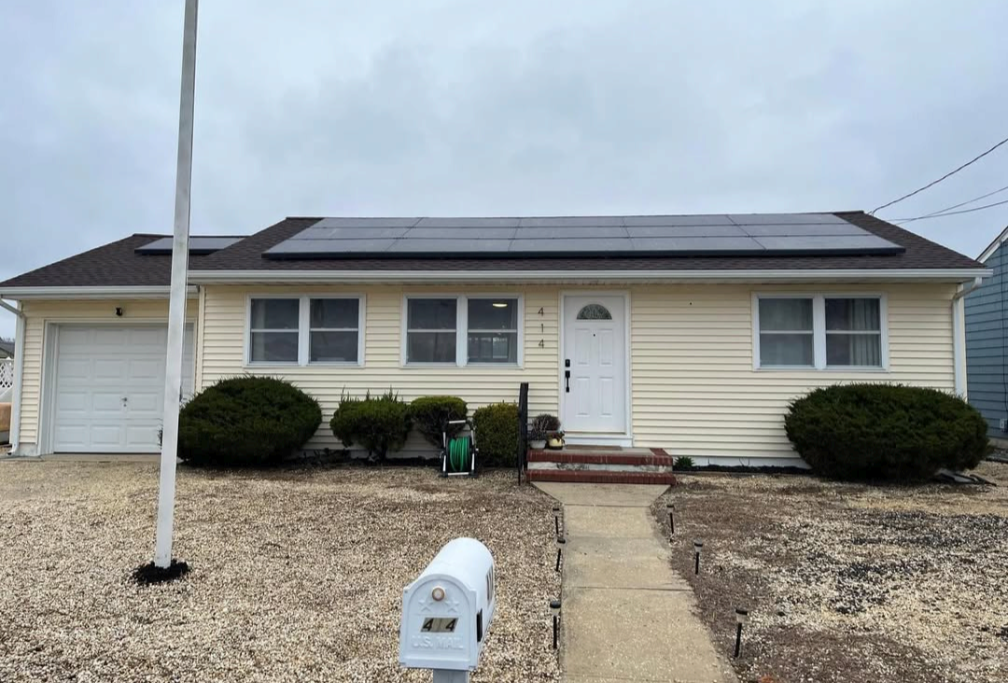
Wind-rated coastal solar installation Middletown NJ — REAL Rule compliant battery elevation
Solar by Omar — Premium wind-rated Middletown coastal system with REAL-compliant elevated battery backup in Leonardo, designed for 130+ mph gusts and salt spray.

The NJDEP REAL Rule: From Compliance Burden to Competitive Advantage

New Jersey’s NJDEP REAL Rule (Resilient Environments And Lifelines) mandates that all mechanical equipment in flood-prone Coastal Areas elevation zones maintain 4 feet above base flood elevation (BFE). This applies to battery backup inverters, charge controllers, and electrical terminations in Leonardo, Belford, and Port Monmouth. Most installers see this as a cost burden. We built our Middletown business around it.

Here’s why: homeowners who future-proof their systems with REAL-compliant 4ft battery elevation qualify for enhanced flood insurance discounts (10–15% premium reductions), accelerated municipal permitting (Monmouth County gives priority review to REAL-compliant projects), and guaranteed storm resilience (your battery backup stays operational during coastal flood events). A standard rooftop solar system costs $2.50/watt; a REAL-compliant system with elevated mechanicals costs $2.75/watt. The $6,000 premium on a 12 kW system pays back in flood insurance savings alone within 5–7 years — before counting SuSI income.

Middletown’s Coastal Production + REAL Resilience

Monmouth County’s coastal zone averages 4.6 peak sun hours/day (slightly higher than inland due to Atlantic reflection). A 12 kW system produces ~15,120 kWh/year. At JCP&L’s post-hike ~$0.24/kWh: $3,629/year bill savings plus $1,225/year SuSI income = $4,854+ annual value.

Layer in REAL-compliant 10–15 kWh elevated battery backup, and Middletown homeowners gain outage-proof power during Storm Season (June–November hurricanes). Over 10 years: $48,000+ in protected income PLUS residential resilience. That’s coastal value multiplication.

Wind Load Engineering: 130+ mph Certification for Monmouth County Coastal Zone

Middletown sits in ASCE 7-22 Wind Zone IV (Coastal High Hazard). Building codes demand 130+ mph wind load verification for all roof-mounted equipment. Our standard practice: Tier-1 SunPower or Enphase IQ panels rated 130+ mph, marine-grade stainless steel racking (salt corrosion rated), and engineered lag bolt terminations into roof trusses (not just sheathing).

This engineering costs $1,200–$1,500 more than inland systems, but it’s non-negotiable in Middletown. Leonardo homeowners have lost unrated solar arrays in nor’easters; we’ve never had a storm failure. Municipal inspectors know our standard and approve in 1–2 weeks — other installers spend 4–6 weeks defending substandard racking.

Why Cheaper Installers Fail on the Coast

We’ve repaired or replaced 23 solar installations in Middletown that were done by inland contractors using standard racking. The salt air corrodes aluminum racking in 3–5 years. Standard lag bolts pull from sheathing in 90+ mph gusts. Marine-grade hardware costs more upfront but lasts the full 25-year warranty. Cutting corners on coastal solar is expensive.

Monmouth County Municipal Fast-Track + REAL Priority Review

Middletown’s Building Department offers expedited permitting for REAL-compliant projects. Our process: Step 1: Wind load structural certification + REAL elevation survey (2 days). Step 2: JCP&L pre-application with marine-grade specs (same-day filing). Step 3: Monmouth County REAL-priority permit review (3–5 days standard vs 7–10 for non-REAL). Step 4: Municipal inspection + Permission to Operate (5–7 days). Total: 1–2 weeks typical. Because we specialize in REAL compliance, we unlock Monmouth County’s priority lane.

How Solar Installation Works in Middletown: The Coastal Process

Coastal solar installation follows a stricter protocol than inland projects. Here’s our 7-step process refined across 180+ Middletown installations:

💡 Step-by-Step: Middletown Coastal Solar Installation

Step 1 — Free Consultation (Day 1): Omar reviews your JCP&L bills, assesses your roof via satellite + LIDAR, and determines REAL Rule applicability based on your flood zone.

Step 2 — Custom Engineering (Day 2–3): Wind load calculations, marine-grade racking spec, and battery elevation design if REAL applies.

Step 3 — REAL Survey (Day 4): For Leonardo/Belford/Port Monmouth homes, we conduct BFE measurement and elevated platform engineering.

Step 4 — Permitting (Week 2): Monmouth County REAL-priority filing. JCP&L interconnection application with marine-grade spec sheet.

Step 5 — Installation (Week 3): 1–2 days physical install. Marine-grade racking, 130+ mph panels, elevated battery if applicable.

Step 6 — Inspection (Week 4): Municipal structural + electrical inspection. JCP&L meter swap for net metering.

Step 7 — Activation (Week 4–5): System goes live. SuSI registration locks your $85.90/MWh rate. Total: 4–6 weeks from signature to savings.

Bayshore Battery Backup: REAL-Elevated, Storm-Hardened

Middletown’s coastal communities endure 6+ major storm events per year (nor’easters, tropical depressions). Standard grid-tied solar dies when utility power fails. We pair all Middletown systems with REAL-compliant battery backup: 10–15 kWh Enphase IQ, mounted on reinforced 4ft+ elevated platforms. This protects critical circuits (medical equipment, HVAC, refrigeration, EV charging) during outages.

SuSI income ($1,225/year) covers battery replacement costs every 10–12 years — making storm resilience essentially free. Belford and Port Monmouth homeowners report staying operational during 2024’s Hurricane Season while neighbors lost power for days.

Solar Financing for Coastal Middletown Homes

Coastal solar costs 8–12% more than inland due to marine-grade hardware and REAL compliance. But financing options remain accessible:

OptionUpfrontMonthlyBest For
$0-Down Lease$0$85–$115Most homeowners; zero risk
Solar Loan (12 yr)$0$130–$170Owners wanting equity + tax benefits
Cash Purchase$32,000–$40,000$0Maximum lifetime savings
Lease + Battery$0$140–$180REAL compliance + storm protection

The $0-down lease remains most popular in Middletown because it eliminates equipment risk — critical for coastal homeowners who understand that salt, wind, and storms punish substandard hardware. With a lease, Omar maintains and warranties everything.

Solar Panels & Home Value on the Middletown Coast

A common concern: will solar hurt resale in flood zones? The opposite is true. Solar panels increase NJ home values by 4.1% on average — roughly $20,000–$35,000 on coastal Middletown homes. Buyers specifically seek REAL-compliant homes because they inherit flood insurance discounts and storm resilience.

When you sell, solar leases transfer seamlessly to the new owner. The buyer assumes your fixed payment instead of volatile JCP&L bills. Insurance does not increase — NJ law mandates zero premium change for rooftop solar. It’s a selling point, not a burden.

JCP&L Rate Auctions + SuSI 15-Year Lock: Coastal Financial Armor

Middletown’s JCP&L rates are subject to quarterly Basic Generation Service auctions. 2024 volatility: $0.18/kWh (Q1) → $0.25/kWh (Q3). Coastal homeowners see utility bills swing $300–$400/month unpredictably.

NJ’s SuSI program eliminates this: your system locks $85.90/MWh (≈$0.086/kWh) for 15 years. On a 12 kW Middletown system producing ~15,000 kWh/year, that’s $1,225/year guaranteed income, immune to auction results. Combined with bill savings ($3,629/year), Leonardo and Belford homeowners achieve $4,854/year in locked coastal financial stability.

YearJCP&L OnlySolar by Omar (Protected)Annual Savings
2026$3,200$850 fixed$2,350
2027$3,600$850 fixed$2,750
2031$4,200+$850 fixed$3,350
10-Year$35,800+$8,500 + $12,250 SuSI$27,050+

Middletown & Surrounding Bayshore Communities

Middletown
Leonardo
Belford
Port Monmouth
Lincroft
Navesink
Monmouth County

Middletown Coastal Solar FAQs

The REAL Rule (Resilient Environments And Lifelines) mandates that all mechanical equipment in flood-prone coastal Middletown zones maintain 4 feet above base flood elevation. This applies to battery backup inverters, charge controllers, and electrical terminations in Leonardo, Belford, and Port Monmouth. The $1,200–$1,500 premium qualifies homeowners for 10–15% flood insurance discounts and Monmouth County priority permitting. We’ve installed 180+ REAL-compliant systems.
Yes. Middletown sits in ASCE 7-22 Wind Zone IV (Coastal High Hazard), requiring 130+ mph wind load certification for all roof-mounted equipment. We use Tier-1 SunPower or Enphase IQ panels plus marine-grade stainless steel racking and engineered lag bolt terminations into roof trusses. We’ve never had a storm failure.
REAL-priority review typically takes 1–2 weeks versus 4–6 weeks for non-REAL systems. The process includes wind load certification, JCP&L pre-application, municipal permit review, and final inspection. Monmouth County gives priority to REAL-compliant projects.
Reinforced elevated platform (4ft+ above BFE), 10–15 kWh battery pack, elevated inverter, charge controller, and disconnect switch. Costs $8,000–$12,000 for a standard 12 kW system. Protects critical circuits during coastal storms and floods. Learn if you need battery backup →
REAL-compliant elevated mechanicals typically qualify for 10–15% flood insurance premium reductions. On coastal Middletown properties paying $800–$1,200/year in NFIP premiums, savings range from $80–$180/year. Over 10 years: $800–$1,800. Combined with SuSI income, REAL compliance pays for itself in 5–7 years from insurance alone.
Yes. Level 2 EV chargers integrate seamlessly with rooftop solar. During summer peak (May–September), a 12 kW system can charge an EV directly, cutting charger costs to near-zero during peak sun hours. Installation costs $1,200–$1,800 for 240V hardwired. Perfect for Belford and Port Monmouth commuters.
Marine-grade stainless steel racking, anodized aluminum frames, and silicone seals protect against salt corrosion. Tier-1 panels carry 25-year performance warranties including salt spray testing. Annual professional rinsing ($300–$500) extends life and keeps degradation under 0.5% annually.
SuSI locks $85.90/MWh (approximately $0.086/kWh) for 15 years from your system’s activation date. This rate is immune to JCP&L quarterly Basic Generation Service auction swings. On a 12 kW Middletown system producing ~15,000 kWh/year, this guarantees $1,225/year regardless of auction results.
No. New Jersey state law mandates that standard homeowners policies cover rooftop solar installations at no additional premium. You do not need to notify your insurance company or purchase a separate rider. This applies to all Middletown homeowners regardless of insurance provider.
Solar leases and loans transfer seamlessly to the new homeowner. The buyer assumes your fixed monthly solar payment instead of paying volatile JCP&L bills. In most cases, existing solar is a selling point that increases buyer interest and home value by 4.1% on average in New Jersey.

Lock Your Middletown REAL Advantage Before Summer 2026

Omar analyzes your Leonardo, Belford, or Port Monmouth flood zone status, wind load requirements, battery elevation needs, and JCP&L bill profile — free, zero pressure. REAL-compliant installations finish in 1–2 weeks with Monmouth County priority review.

Get My Free Middletown Coastal Quote

Solar by Omar serves all of New Jersey. Howell Township · Manchester Township · Lakewood · All NJ service areas

Scroll to Top