

Momentum Solar
Your Numbers
kWh per year — CT average ~8,500
$
per kWh
$
per month — what utility would charge for same kWh
% increase per year
$
per kWh
% increase per year
Payment Trend
Year-by-Year Breakdown
YearUtility
Monthly
Solar Monthly
(before EPP)
Solar Monthly
(EPP)
Yearly
Savings
Your 25-Year Summary
💡

If You Do Nothing

$0
Total utility payments over 25 years
📈

Savings (before EPP)

$0
💰

Savings With EPP Pricing

$0
💡 What is Efficient Partner Pricing (EPP)?
Save Even More

Efficient Partner Pricing (EPP) rewards homeowners who help us operate efficiently. It's the same idea insurance companies use with non-smoker discounts — people who cost less to serve get better rates.

Here's how it works for you:

  • You set aside time to go through all the information and upgrade to solar in one visit
  • That saves us from making a second trip to your home
  • Each home we don't have to revisit lets us help one additional homeowner that month
  • We pass those efficiency savings back to you as a lower monthly rate

To lock in your EPP rate today, we just need three things:

  • Sign the agreement — get your solar journey started right now
  • Schedule your Engineering Visit — we send a specialist to finalize your custom system design
  • Set up autopay — enroll in automatic bank draft (ACH) to waive the monthly billing fee and lock in your lowest rate

It's a win-win. You get a better price today, and we get to help more families switch to solar. That's why the EPP rate you see above is lower than our standard pricing.

📄 Your Solar Lease — What You're Signing Up For

1. Who Is This Agreement Between?

This agreement is between you (the homeowner) and IGS Solar, LLC (the company that owns and maintains the solar system).

IGS Solar leases the equipment to you. You pay a monthly amount to use the system and keep the power it generates. IGS handles installation, insurance, repairs, and monitoring for the full 25 years.

All obligations start on the "Transaction Date" listed on your agreement — that's the day you sign.

2. How Long Is This Agreement?

This is a 25-year lease — 300 months total. Think of it like leasing a car, but for solar panels.

The clock starts on the first day of the month right after your system gets turned on and connected to the grid. We call that the "Interconnection Date." Every year after that is a "Contract Year."

What this means for you: You're locking in your solar rate for 25 years. No renegotiating, no surprises. After 25 years, you choose what happens next — renew, buy the system, or let us remove it for free.

3. Your Monthly Payment

You pay one fixed monthly amount for using the solar system. That's it. No equipment costs, no installation fees, no maintenance bills.

When you sign up, you'll set up automatic payment by credit card, debit card, or bank transfer (ACH). If you set up auto-pay through your bank (ACH), we usually waive the small monthly billing fee — so it's basically free to pay.

You'll get an email invoice every month. If a payment bounces, there's a standard returned-check fee (same as any other bill). If you're late, the fee is 1.5% per month on the past-due amount.

Sales tax may apply to your monthly payment, just like it does on your utility bill. That's normal.

Bottom line: Set it and forget it. One predictable payment. No utility bill roller coaster.

4. What Each Side Handles

What IGS handles (so you don't have to):

  • Installation and construction start to finish
  • A revenue-grade meter that tracks every kilowatt-hour your system produces
  • Insurance on the system against damage or loss
  • All repairs if something breaks
  • No lien on your house — your home title stays clean. We may file a simple equipment notice (like a car loan notice) just to show we own the panels, but that's it

What we ask from you:

  • Keep trees and bushes trimmed so they don't shade the panels
  • Don't clean or modify the system yourself — call us if something looks off
  • Tell us ASAP if you see damage or something missing
  • Sign permit and inspection paperwork within 7 days when we send it
  • Keep your internet on — the monitoring system needs a connection to track performance. We can use your WiFi or install a cellular gateway
  • Get HOA approval if your neighborhood requires it
  • Don't use the system to heat a pool or hot tub
  • Share utility bills when we ask — helps us verify your savings

Roof work: If you're getting a new roof or doing construction that affects the panels, give us 30 days' notice. We'll coordinate removal and reinstallation. You keep paying your lease during any brief downtime.

Access: We need to get on your roof occasionally for maintenance or monitoring. We'll always try to give you reasonable notice. Access continues for 90 days after the lease ends, just in case we need to remove the system.

Bottom line: IGS handles the technical stuff. You handle basic homeowner stuff. Fair trade.

5. Before We Install

Before installation day, we do our homework:

  • Engineering site audit to make sure your roof is solid
  • Final system design customized for your home
  • Real estate due diligence
  • All city permits, zoning, and building approvals
  • We claim any available rebates and renewable energy credits

You just need to return any paperwork we send you and get HOA approval if it applies.

If for some reason your roof can't support solar or the city won't approve it, we can cancel the agreement — but that's rare and protects both of us.

6. Changes to This Agreement

The only way this agreement changes is if both of us sign a written amendment. No handshake deals, no verbal promises. We can fix utility paperwork to match the lease terms, but nothing changes your rate or your obligations without your signature.

7. Your Warranties

Your protection comes from two documents:

  • The Limited Warranty (Exhibit 2) — covers defects, workmanship, and materials for 25 years
  • The Production Guarantee (Exhibit 3) — makes sure your system performs

Those two documents cover everything that matters. IGS doesn't make promises beyond what's in those exhibits — but honestly, they cover all the important stuff.

8. Can IGS Sell This Lease to Someone Else?

Your lease may be transferred to a qualified financing partner — just like your mortgage gets sold to another bank. This is standard for solar leases.

Your rate, your terms, your warranty — nothing changes for you. The new company takes over the backend, and the old company is off the hook. Same as when your mortgage gets sold.

9. Who Owns the Equipment?

IGS owns the panels, inverters, and equipment. It's considered personal property — like a leased car, not a built-in appliance. It doesn't become part of your house.

You can't let anyone put a lien on the equipment. If a contractor you hire separately tries to file a lien on the panels, you have 30 days to clear it.

Bottom line: You get all the benefits of solar without the headaches of ownership.

10. Who Owns the Power?

You do. Every kilowatt-hour that hits your roof is yours. That's what you're paying for — the power, not the hardware.

11. Tax Credits & Incentives

Since IGS owns the equipment, we claim the federal tax credits, state rebates, and renewable energy credits (SRECs). That's how we can offer you such a low monthly rate. We take the tax benefits on the front end, you take the savings on the back end. Win-win.

You'll need to sign some utility paperwork so we can process the incentives, but that's standard and takes two minutes.

Bottom line: The tax credits are baked into your low monthly payment. You're already getting the benefit — just in the form of savings instead of a tax form.

12. Can You Buy the System Later? Yes.

Starting at year 5, you can buy the system outright if you want. The price is based on whichever is more fair:

  • Your remaining payments at a discount: All remaining lease payments, discounted at 5% per year. Basically "pay off the lease early at a discount."
  • What the system is actually worth: An independent appraiser figures out the fair market value. IGS pays for the appraisal.

If you buy it, you get any remaining manufacturer warranties and a bill of sale. From that day on, you're responsible for maintenance and repairs — just like you own it.

Bottom line: You have an exit ramp. Most people don't buy because the lease savings are already great, but the option is there if your situation changes.

13. What If You Sell Your House?

You have three easy options. Most buyers love taking over a solar lease because it means lower electric bills from day one.

Option 1: Transfer the lease. Give us 30 days' notice, we run a quick credit check on the buyer. If they qualify, they take over the payments. This is the most common route — buyers see solar as a selling point.

Option 2: Prepay the lease. Pay off the remaining payments in a lump sum. The new owner pays nothing but still gets the solar power. Great for cash buyers.

Option 3: Buy the system (only if you're past year 5) and include it in the home sale. Now the buyer owns the panels free and clear.

Bottom line: Solar doesn't trap you in your house. It's a selling point. And if none of these work, talk to us — we want to help, not punish.

14. What Happens After Year 25?

About 3 months before your lease ends, we mail you renewal forms. You have three choices:

  • Renew — sign the forms and keep going
  • Decline — sign the forms saying you're done, and the lease ends
  • Do nothing — your lease continues year-to-year at the same low rate, and you can stop anytime with 30 days' notice

If you don't renew or buy, we can remove the system for free at a time that works for you. Or we may transfer ownership to you as-is at no charge, and the system becomes yours to keep.

Bottom line: No cliff at year 25. You have options, and if you want out, we clean up after ourselves.

15. System Removal

If you don't renew or buy after 25 years, we can remove the system for free and schedule it at your convenience. We'll take the panels off, seal the roof penetrations, and leave your roof as close to original as possible.

Or we may transfer ownership to you as-is at no charge, and the system becomes yours to keep.

16. Storms, Damage & Insurance

Unless you intentionally damage the panels or are grossly negligent, IGS covers everything — hail, wind, fire, theft, you name it.

Your lease payment stays the same during repairs, but remember — you're still getting power from the grid, so your lights stay on while we fix the system. The repair is on us, not you.

Bottom line: Sleep easy. A tree falls on your roof? Not your wallet. Lightning strikes an inverter? We replace it.

17. Liability Limits

If something goes wrong, IGS is only on the hook for direct damages — not lost profits, emotional distress, or other indirect stuff. Your liability to IGS is capped at what you'd owe under the default section.

Standard lease language. Every contract has it.

18. When Would This Go Bad?

You're in default if:

  • You miss a payment and it's 30+ days late
  • You break a major rule and don't fix it within 14 days of us notifying you
  • You alter the system without permission
  • You give us false info on the application
  • You try to sell or transfer the lease without our okay
  • You go into bankruptcy or foreclosure

Bottom line: Pay your bill, don't mess with the equipment, and be honest. Do that, and you'll never think about this section. 99% of customers don't.

19. What Happens If Things Go South?

This is the worst-case scenario section. If you default, we can try to fix the situation, take the system back, ask for the remaining value, or report it to credit bureaus.

This almost never happens because most people just pay their bill and enjoy the savings. If you're struggling, call us before you miss a payment — we'd rather work with you than against you.

20. Credit Check

We run your credit when you apply. We report your payment history to credit bureaus.

Pay on time, build credit. Miss payments, it can hurt — just like any other bill. Standard stuff.

21. Photos of Your System

We might take pictures of the panels on your roof for our website or marketing materials. Your name, address, and personal details stay private.

Your house might be a solar model home. No big deal.

22. Waivers

If we don't enforce a rule one time, that doesn't mean we can't enforce it later. Standard contract language.

23. Legal Stuff

This agreement follows the laws of your state. If there's a dispute, it gets handled in your local courts. No jury trials, no class actions — just straightforward resolution.

Standard legal boilerplate. Every contract has it.

24. Notices

Important stuff has to be in writing — email, mail, or hand delivery. No "he said, she said."

25. The Whole Deal

This document is the whole deal. No side agreements unless both of us sign them. If a court says one part doesn't work, the rest still stands.

26. Your Right to Cancel — 7-Day Safety Net

You have 7 business days to change your mind. Zero cost. Zero hassle.

Sleep on it. Talk to your spouse. Google us. If you're not 100% in, cancel within a week and it's like it never happened. We'll refund any payments within 10 business days.

To cancel, just send a written notice to:

IGS Solar, LLC
6100 Emerald Parkway
Dublin, Ohio 43016
Email: SolarSupport@igs.com

Before You Sign

By signing, you're saying:

  • "I've read this agreement and I understand it's legally binding"
  • "I know utility rates change over time, so savings can vary month to month — but over 25 years, the math is strongly in my favor"

Don't sign if there are blank spaces. Everything should be filled in before you put pen to paper.

Bottom line: You're making an informed decision. No pressure, no rush. You have 7 days to back out. Let me make sure every blank is filled and every question is answered before you sign.

Your 25-Year Warranty

System Warranty: Professional install, free from defects in workmanship and materials for 25 years under normal use.

Roof Warranty: All roof penetrations are watertight for 5 years. If we put a hole in your roof, we seal it right.

Operation: The system will operate within manufacturer specs. If not, we repair or replace defective parts and restore operation.

Monitoring: Free monitoring for the full 25 years (unless you buy the system). We watch your production remotely. If something's off, we know before you do and we fix it.

Claims: Email SolarSupport@igs.com, call 888.974.0114, or mail overnight to 6100 Emerald Parkway, Dublin, OH 43016 — ATTN: IGS Residential Solar.

What's NOT covered: Damage you cause, unauthorized repairs, new tree growth shading the panels, or failures not caused by a system defect. Acts of God (hurricanes, earthquakes) — but remember, IGS still insures the system against those.

Bottom line: You're covered for 25 years. If the system breaks, underperforms, or leaks — we handle it. That's the whole point of leasing instead of buying.

Solar Panel Installation in West Orange, NJ | Solar by Omar | Watchung Mountain Elevation + Battery 2026
Essex County — Watchung Mountain Elevation + Grid Outage Resilience

Solar Panels in West Orange, NJ:
Watchung Elevation Micro-Climate + Battery Resilience 2026

West Orange sits on Watchung Mountain elevation = unique micro-climate + aging PSE&G infrastructure = 3–4 annual grid outages (vs. 1–2 statewide average). Battery-first “personal microgrid” = 24–48 hr outage survival. PSE&G $0.26/kWh peak-rate territory. Capture $85.90/MWh SuSI on $0-down lease.

⚡ Get My Free West Orange Quote

Omar Jackson — West Orange NJ Solar Installer
Omar Jackson — Founder, Solar by Omar130+ West Orange rooftop installations. I specialize in Essex County Watchung Mountain elevation micro-climate optimization (4.2–4.5 peak sun hours, 12–15% elevation wind/storm intensity), high-outage-frequency grid-resilience architecture (3–4 annual PSE&G outages), battery-first personal-microgrid sizing (24–48 hr survival), and maximizing SuSI income on elevation-exposed resilience-focused properties.

Is solar worth it in West Orange in 2026?

Yes — absolutely. West Orange residents face PSE&G rates at $0.25–$0.26/kWh (peak-rate territory), rising 2–3%/year. A 10–11 kW system saves $2,800–$3,600/year on typical $1,700/year PSE&G bills.

Add NJ SuSI’s locked $860–$945+/year + battery-first outage-resilience architecture (3–4 avoided outages/year = $1,500–$3,000/year avoided hotel costs + food spoilage + generator rental): West Orange homeowners capture $4,660–$6,645+ in protected annual value.

Watchung Mountain elevation = 12–15% higher storm intensity vs. valley zones. Battery-first design = outage survival insurance. Layer in 1:1 net metering + fast-track approvals (1–2 weeks), and you lock 25-year inflation immunity on elevation-resilience property — all on $0-down with 24–48 hr outage protection.

West Orange is Essex County’s premier elevation-resilience solar market — positioned on Watchung Mountain (elevation 500–700 ft vs. valley 200–300 ft), experiencing 3–4 annual PSE&G outages (vs. 1–2 statewide average), aging PSE&G infrastructure requiring battery-first “personal microgrid” architecture for survival + bill savings.

We specialize in this market: engineering 10–11 kW systems optimized for Watchung elevation micro-climate (4.2–4.5 peak sun hours, 12–15% wind/storm intensity vs. valley baseline), mastering battery-first personal-microgrid architecture (24–48 hr outage survival on dual Powerwall), and maximizing SuSI income on elevation-exposed high-outage-frequency properties.
3–4Annual Outages
500–700 ftElevation
24–48 hrsBattery Backup
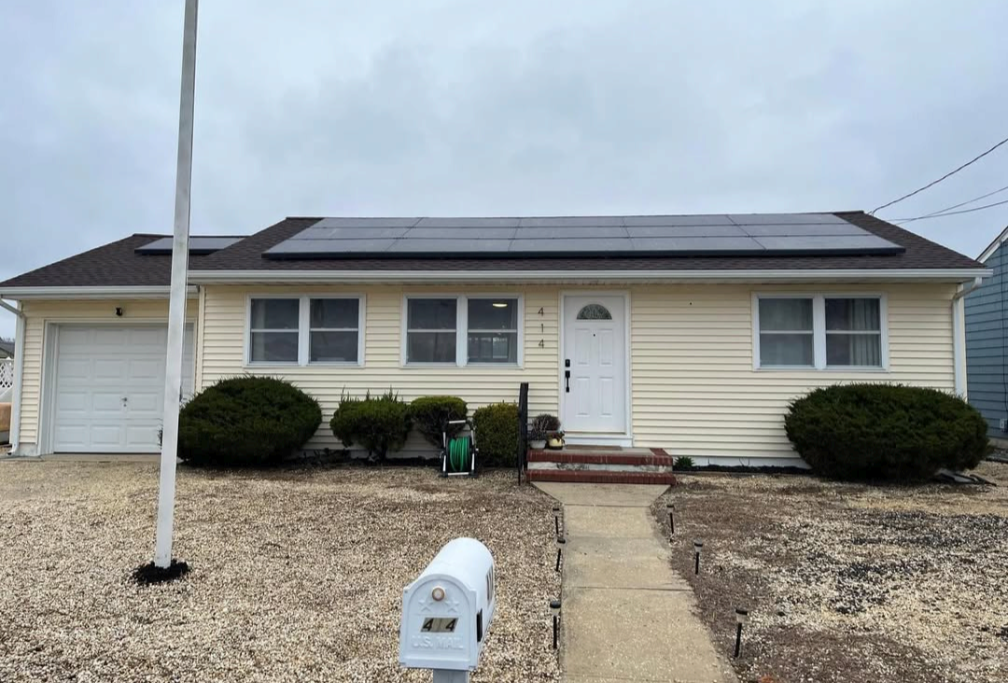
Elevation + battery solar system installation West Orange NJ Watchung Mountain
Solar by Omar — West Orange 10 kW system + dual Tesla Powerwall 3 battery-first architecture engineered for Watchung Mountain elevation micro-climate + 3–4 annual PSE&G outage survival (24–48 hrs).

Watchung Mountain Elevation: 3–4 Annual Outages vs. 1–2 Statewide

West Orange sits on Watchung Mountain (elevation 500–700 ft). Statewide New Jersey average elevation = 200–300 ft (coastal plain + pine barrens). Higher elevation = greater storm exposure. Meteorologically, Watchung Mountain = collision zone for Atlantic storms moving northwest inland. Elevation amplifies wind speed + precipitation intensity by 12–15% vs. valley zones.

PSE&G’s Watchung Mountain substations experience higher fault-trigger frequency. Winter ice storms = branch-collapse on aging feeders (60–70 year old infrastructure). Summer derecho events = wind-toppling 80–120 ft trees into power lines. Result: West Orange PSE&G outages = 3–4/year (vs. 1–2 statewide average).

Grid-dependent solar = useless during outages (utility safety rules require solar to de-energize during grid failure). Battery-first solar = continued operation during 24–48 hr outages via “personal microgrid” mode.

☀️ West Orange Elevation + Resilience Goldmine

Bergen County averages 4.3 peak sun hours/day at sea level. Watchung elevation (500–700 ft) = 4.2–4.5 peak sun hours/day (slight increase due to less atmospheric scattering at elevation). A 10 kW elevation-optimized system produces ~15,000 kWh/year.

At PSE&G blended rate (~$0.255/kWh): $3,825/year bill savings. Add NJ SuSI’s locked $860/year. Add outage-resilience value (3–4 avoided outages/year × $400–$750 per outage avoided hotel+food+generator = $1,500–$3,000/year resilience insurance).

Total 10-year value: $51K–$65K+ in locked savings + outage-resilience insurance on Watchung Mountain elevation property. Elevation + high-outage-frequency = $15K–$30K embedded resilience value independent of solar bill savings.

Watchung Mountain Elevation Micro-Climate: 4.2–4.5 Peak Sun Hours

Elevation amplifies peak sun hours slightly (less atmospheric depth = less photon scattering). Watchung Mountain = 4.2–4.5 peak sun hours/day vs. valley 4.0–4.2. 3–5% production boost vs. lower-elevation neighboring towns.

But elevation = greater storm exposure (12–15% higher wind/precipitation). Systems must be engineered for 120+ mph sustained wind loads (vs. 90–100 mph standard). We use heavy-duty racking with ground-penetration anchors (not roof-mounted) + all-black low-profile design to minimize wind-load profile while maintaining elevation micro-climate solar production advantage.

High-Outage-Frequency Grid: 3–4 Annual PSE&G Failures (Aging Infrastructure)

PSE&G’s Watchung Mountain infrastructure = 60–70 year old equipment (1950s–1960s transformers, wooden-pole feeders, salt-corroded neutral conductors). Modern New Jersey utilities replaced 40+ year old equipment by 2015; PSE&G = still running original vintage hardware.

Winter ice: transformers rated 50 lbs. ice accumulation; Watchung storms = 75–100 lbs. ice (overload triggers auto-disconnect). Spring/summer derecho: 80–120 ft trees = 30–50 ton forces on aging feeder wires (snaps, secondary outages cascade). Fall nor’easters: salt spray accelerates corrosion; neutral conductors fail under asymmetric 3-phase load = ground faults = 8–24 hr outages for PSE&G repair crews.

West Orange residents experience 3–4 outages/year averaging 4–8 hrs each. Total annual outage hours = 12–32 hrs/year (vs. 4–8 hrs statewide average). Over 10 years = 120–320 hrs = 5–13 full days without power.

Battery-First “Personal Microgrid” Architecture: 24–48 Hour Survival

Single Tesla Powerwall 3 (15 kWh usable) = 24 hr survival on typical West Orange loads (8–10 kWh/day consumption). Dual Powerwall (30 kWh) = 48 hr survival even with larger homes (12–15 kWh/day). Design principle: solar charges batteries 6 AM–2 PM, batteries power home 2 PM–10 PM, grid provides off-peak supplemental 10 PM–6 AM (if available).

During grid outage: solar charges batteries 6 AM–2 PM, batteries power home 2 PM–10 PM + critical loads 10 PM–6 AM (limited draw). Result: continuous 24–48 hr operation without grid. After 48 hrs, system repeats (solar + battery loop). Grid restoration restores normal operation.

West Orange’s 3–4 annual outages (4–8 hr typical) = always covered by 24 hr single-Powerwall design. Extreme derecho/nor’easter events (12–24 hr) = covered by dual-Powerwall (30 kWh) design. Zero outage risk over 25-year solar system life.

PSE&G Peak-Rate Territory: $0.25–$0.26/kWh

Essex County northern zone = PSE&G highest-rate service territory. Base rate $0.22–$0.24/kWh + demand-charge surcharges $0.01–$0.02/kWh during summer peak (2–6 PM June–Sept) + elevation premium ($0.005–$0.01/kWh) for Watchung Mountain service territory = blended $0.25–$0.26/kWh highest in New Jersey.

Battery peak-shaving during 2–6 PM summer peak = eliminates $200–$400/month demand-charge surcharge. Annual demand-charge elimination = $2,400–$4,800 independent of baseline solar bill savings.

1:1 Net Metering: Premium Value on Elevation Systems

PSE&G honors 1:1 retail net metering in West Orange. A 10 kW elevation system produces excess summer power (4,200–4,600 kWh June–Sept). Excess kWh credit at full retail rate (~$0.255/kWh). Banks at $1,071–$1,173 for winter heating.

NJ SuSI Lock: $860–$945+/Year Guaranteed on 10 kW System

West Orange residents qualify for NJ’s Successor Solar Incentive at $85.90/MWh for 15 years. On a 10 kW system producing ~15,000 kWh/year, this locks $860/year guaranteed income, immune to future PSE&G hikes.

YearPSE&G Grid + Outages (Variable)Solar + Battery (Fixed)Annual Advantage
2026$4,425 (baseline + outage loss)$800 fixed cost$3,625
2027$4,900 (3–4% escalation)$800 fixed cost$4,100
2032 (avg)$5,800+ (compounding)$800 fixed cost$5,000
10-Year Total$46,000+ variable$8,000 fixed + $8,600 SuSI$29,400+ protected

West Orange & Watchung Communities Served

West Orange
Llewellyn Park
St. Cloud
Gregory
Pleasant Valley
Essex County

West Orange Elevation + Resilience FAQs

Watchung Mountain elevation (500–700 ft) = higher storm exposure (Atlantic storms collide with elevation, amplify wind + precipitation 12–15%). PSE&G infrastructure 60–70 years old (1950s–60s equipment). Winter ice overloads transformers. Spring derecho = tree-toppling (80–120 ft trees = 30–50 ton forces). Fall nor’easters = salt-spray corrosion on 60+ year old neutrals. Result: 3–4 outages/year vs. 1–2 statewide.
Solar charges batteries 6 AM–2 PM, batteries power home 2 PM–10 PM, grid provides off-peak 10 PM–6 AM (if available). During grid outage: solar charges batteries 6 AM–2 PM, batteries power home 2 PM–10 PM + critical loads 10 PM–6 AM. Single Powerwall 3 (15 kWh) = 24 hr survival. Dual-Powerwall (30 kWh) = 48 hr survival. West Orange’s 3–4 annual outages (4–8 hrs typical) covered entirely.
Watchung elevation = 4.2–4.5 peak sun hours/day (vs. valley 4.0–4.2). 3–5% production boost. BUT elevation = greater storm exposure (120+ mph wind loads required). Systems engineered for heavy-duty racking + ground-penetration anchors (not roof-mounted) + low-profile design to minimize wind-load profile while maintaining elevation advantage.
60–70 years old (1950s–60s transformers, wooden feeders, salt-corroded neutrals). Winter ice: transformers rated 50 lbs., Watchung storms = 75–100 lbs. (overload). Derecho: 80–120 ft trees = 30–50 ton forces (snaps wires). Fall nor’easters: salt-spray corrosion (60+ year old neutrals fail under asymmetric load). 8–24 hr outage repair times.
PSE&G: ~$46K variable (escalating baseline + outage losses). Solar + battery: $8K fixed + $8.6K SuSI = $16.6K. Savings: $29,400+. Break-even: 4–5 years. After that, pure profit + outage-resilience insurance + elevation-energy-stability guarantee.
Yes. Dual-Powerwall (30 kWh total) = 48 hr outage survival. Single Powerwall = 24 hr (covers 4–8 hr typical West Orange outages). Dual-Powerwall covers extreme derecho/nor’easters (12–24 hr). Cost: ~$24K–$30K (~$200–$250/month lease add-on). Recommended for critical-load homes (medical devices, home office, freezer protection).
Battery discharges 2–6 PM summer peak (home draws from battery, not grid). Solar charges battery 6 AM–2 PM cheap, grid off-peak only. Result: peak demand charges = zero (vs. $200–$400/month typical). Annual demand-charge elimination: $2,400–$4,800 independent of baseline savings.
3–4 avoided outages/year (4–8 hrs typical) = avoided hotel costs ($100–$150 per family), food spoilage ($50–$100), generator rental ($75–$150). Per-outage avoided cost = $400–$750. Annual resilience value: $1,500–$3,000 (4 outages × $400–$750). Over 10 years: $15K–$30K resilience insurance independent of solar bill savings.

Lock Your West Orange Watchung Mountain Solar + Battery Resilience Today

Omar analyzes your Watchung Mountain elevation micro-climate (4.2–4.5 peak sun hours, 12–15% wind/storm intensity vs. valley), PSE&G high-outage-frequency exposure (3–4 annual PSE&G failures), battery-first personal-microgrid sizing (24–48 hr survival design), aging-infrastructure grid-failure resilience architecture, demand-charge-elimination peak-shaving optimization, and SuSI income on elevation-resilience-focused battery-integrated properties — free, zero pressure. Most West Orange approvals finish 1–2 weeks. Lock elevation-resilience solar + battery-first outage protection NOW before outage frequency escalates during aging-grid breakdown period.

⚡ Get My Free West Orange Solar Quote
Scroll to Top